



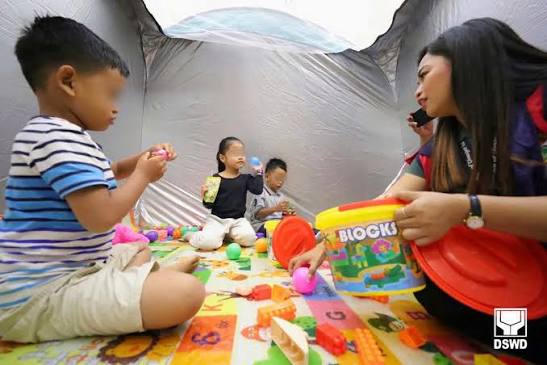
The shortage of developmental pediatricians in the Philippines is limiting access to formal disability assessments for public-school learners, with nearly half of the country’s certified specialists based in Metro Manila, according to the Second Congressional Commission on Education (EDCOM 2).
Data from the Philippine Society for Developmental and Behavioral Pediatrics (PSDBP) showed that as of June 2026, only 109 certified developmental pediatricians were practicing nationwide, serving an estimated five million learners with disabilities.
Of the 156 regional clinic listings, 74 or 47% were in the National Capital Region (NCR), followed by CALABARZON with 24 or 15%, and Central Luzon with 18 or 12%.
Only 7.7% of the regional listings were in the Visayas and 9% in Mindanao. Bicol, MIMAROPA, Eastern Visayas and SOCCSKSARGEN each had only one listed specialist, while none were listed in Caraga and the Bangsamoro Autonomous Region in Muslim Mindanao (BARMM).
The 156 listings do not represent 156 individual doctors, as 42 of the 109 certified specialists operate clinics in more than one region.
The shortage is also linked to limited opportunities to train new specialists. EDCOM 2 found that only five institutions nationwide offer fellowship programs in Developmental and Behavioral Pediatrics: the University of the Philippines-Philippine General Hospital, Philippine Children’s Medical Center, National Children’s Hospital, The Medical City and De La Salle University Medical Center.
Three of these are government hospitals and two are private institutions. Most are in Metro Manila, with De La Salle University Medical Center in Cavite as the only listed training institution outside the capital region.
PSDBP Vice President Dr. Lourdes Tanchanco said the existing programs can accommodate only a few trainees at a time.
“Right now we have around five training institutions. Majority are in NCR and then in terms of statistics, we can accommodate around 2 to 3 doctors or pediatricians in each of the training programs,” Tanchanco said during a consultation with EDCOM 2.
EDCOM 2 Co-Chairperson Sen. Joel Villanueva called for additional consultant and fellowship positions in the three government training hospitals to increase their capacity to produce specialists.
“These are low-hanging fruits. If we can capacitate these hospitals to train more specialists, maybe we can help expand access to developmental assessment and support services,” Villanueva said.
The workforce shortage comes amid a gap between the number of learners identified with disability manifestations and those with formal diagnoses.
An EDCOM 2 analysis of Department of Education (DepEd) Learner Information System data for School Year 2025-2026 found that 492,902 public-school learners were recorded with disabilities.
Of this number, 312,383 or 63.4% were identified through disability manifestations, while 180,519 or 36.6% had formal diagnoses. The commission clarified that recorded manifestations are observations and should not be treated as clinical diagnoses.
EDCOM 2 Executive Director Karol Mark Yee said the shortage of specialists is reflected in the high number of learners each developmental pediatrician would need to serve.
“Based on learners with formal diagnosis alone, we see the extreme need to proactively address our shortage in Development Pediatricians, with ratios reaching as high as 1:37,068 in Region 5 and 1:24,728 in Region 12,” Yee said. “This is of great concern because learners do not just need diagnosis but continued support also from specialists.”
Davao Region recorded the highest number of enrolled learners with disabilities at 60,257, but only 29% had formal diagnoses. CALABARZON followed with 58,272 learners, while NCR had 46,382, Central Luzon 35,616 and Zamboanga Peninsula 34,977.
Only NCR, CALABARZON and Central Luzon had more learners with formal diagnoses than those identified through observed disability manifestations.
The limited availability of specialists also affects families seeking assessment and rehabilitation services through PhilHealth.
Under PhilHealth Circular No. 2017-0029, children availing of the Z Benefit package for developmental disabilities must undergo assessment at a contracted facility by a physiatrist and/or a developmental-behavioral or neurodevelopmental pediatrician.
The package covers medical and allied-health assessment, rehabilitation therapy and discharge assessment. Posted PhilHealth rates range from P3,626 to P5,276 for assessment or discharge assessment, while each therapy set costs P5,000. Beneficiaries may receive up to nine sets of 10 sessions, subject to clinical criteria and pre-authorization.
However, the concentration of qualified specialists in a few regions could make it harder for families outside these areas to secure the required assessment and access covered services.
EDCOM 2 said the gaps extend beyond diagnosis, involving the identification of learners who need assistance and their referral to appropriate educational and health services.
Under Republic Act No. 11650, or the Inclusive Education Act, Inclusive Learning Resource Centers are intended to provide multidisciplinary assessment, referrals and services for learners with disabilities through coordination among education, health, social welfare and local government agencies.
EDCOM 2 is urging the Department of Health, DepEd, Commission on Higher Education, PhilHealth and local government units to work together to expand developmental assessment and support services.
Its proposed measures include increasing the specialist workforce, expanding training opportunities in underserved regions and strengthening referral systems.
EDCOM 2 Co-Chairperson Sen. Bam Aquino said children should have access to developmental assessment regardless of where they live.
“The concentration of developmental pediatricians in a few regions shows the need to expand access to specialists nationwide. Children who need developmental assessment should not have to contend with limited local services or travel long distances to reach a specialist. We must strengthen the specialist workforce and referral systems so more families can access timely assessment, wherever they live,” Aquino said.
Yee also called for scholarships and training opportunities in regions with few or no specialists, as well as partnerships with local colleges and training institutions.
“Addressing these gaps requires closer coordination among DOH, CHED, DepEd, PhilHealth, and LGUs to expand access to developmental assessment and support services. We should also explore scholarships and training opportunities in regions where specialists are lacking, and strengthen partnerships with local colleges and training institutions to develop more specialists who can serve these communities. Our goal is to ensure that children can access the assessment and support they need, regardless of where they live,” he said.
📷 Media courtesy of DSWD / Facebook















Comments