



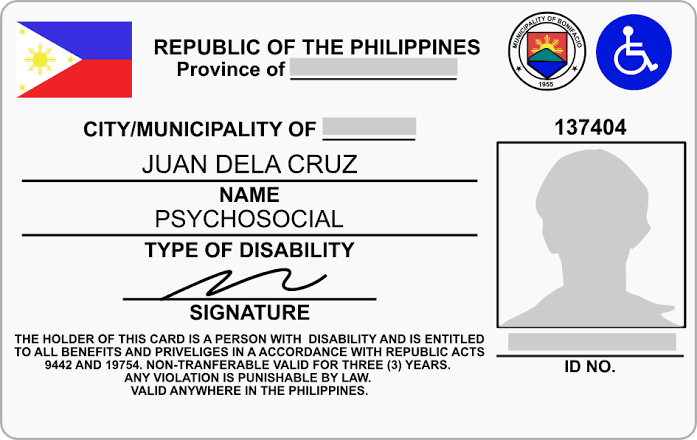
Persons with permanent disabilities may no longer need to repeatedly renew their identification cards, but the Senate is considering additional safeguards to prevent fraudulent applicants from obtaining lifetime validity.
Senator Erwin Tulfo, chair of the Senate Committee on Social Justice, Welfare and Rural Development, raised the issue during a hearing on Monday, Oct. 19, 2026, questioning how authorities would prevent fraudulent PWD IDs already in circulation from being renewed under pending legislative proposals.
Tulfo cited a reported six million fake PWD IDs, a figure he attributed to the Department of Justice.
“Paano natin maiwasan ‘yung mga fake na nakalabas ngayon na magre-renew din (How can we prevent the fake IDs already in circulation from being renewed)?” Tulfo asked.
Department of the Interior and Local Government legal officer Ma. Carmela Villasfer recommended additional verification measures for disabilities that are not immediately apparent, where fraudulent applications may be harder to detect.
However, Villasfer said repeated verification should not be necessary for disabilities that are clearly permanent.
“For the apparent or the obvious na talagang (that’s really) permanent, it’s no longer necessary,” she said.
Tulfo agreed that people with irreversible conditions, including amputations and permanent visual impairments, should not have to repeatedly prove their eligibility for government-mandated benefits.
“Common sense po ito (This is common sense),” he said.
National Council on Disability Affairs Executive Director Glenda Relova said the government had introduced a centralized identification system with security features intended to prevent fraudulent issuance.
Under the system, local government units receive and approve applications, while applicants’ information is entered into a centralized database.
“So ngayon po, iisa na lang po yung mukha ng ating ID. Ang application is sa local government unit. Ang approval is the local government unit. Ang data po ay papasok sa ating sistema (We now have a uniform ID format. Applications and approvals are handled by local government units, while the information is entered into our system),” Relova said.
Each new PWD card carries a unique QR code and alphanumeric identification number. An audit trail also records the personnel responsible for encoding, approving and printing the ID.
Relova said holders of older PWD IDs must reapply under the standardized system, giving authorities an opportunity to reassess their applications before issuing replacement cards.
The NCDA began rolling out the system in December 2025, with a three-year transition period.
However, only about 170,000 PWDs had registered under the new system, far below the approximately 2.9 million individuals targeted for migration, Relova said.
The council is also developing a Disability Needs Assessment Database System to improve beneficiary monitoring and determine the assistance persons with disabilities require.
Tulfo stressed that measures to prevent fraud should not create additional burdens for legitimate beneficiaries, particularly those whose disabilities cannot be reversed.
Photo courtesy of Wikipedia















Comments