



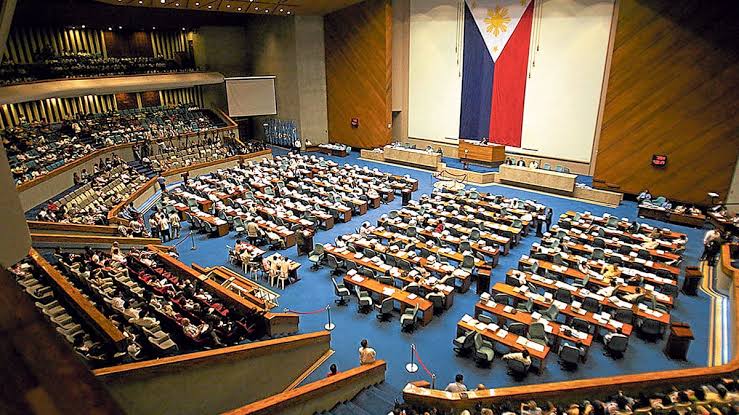
The Supreme Court has ordered Congress to enact a law prohibiting political dynasties “at the earliest opportunity,” ruling that lawmakers’ failure to fulfill the constitutional mandate for 39 years constitutes grave abuse of discretion.
The Supreme Court en banc unanimously issued the ruling during its Aug. 26 session after granting consolidated petitions for certiorari and mandamus challenging Congress’ prolonged failure to enact a law defining and prohibiting political dynasties.
Although Congress is a coequal branch of government, the Court said its inaction in this case was an exceptional circumstance that justified the issuance of a mandamus order directing lawmakers to comply with the Constitution.
“The Congress of the Philippines must henceforth and with utmost urgency enact the appropriate anti-political dynasty law at the earliest opportunity,” the Court said.
At the center of the ruling is Article II, Section 26 of the 1987 Constitution, which states that the State shall guarantee equal access to opportunities for public service and prohibit political dynasties “as may be defined by law.”
The Court said the provision imposes a mandatory duty rather than merely expressing a policy goal.
“The use of the word ‘shall’ makes clear that the State has a mandatory duty both to guarantee equal access to public service and to prohibit political dynasties,” it said.
The Court also clarified that the phrase “as may be defined by law” does not give Congress the option of deciding whether to prohibit political dynasties.
“Rather, it gives Congress the authority to define what constitutes a political dynasty and determine the scope of the prohibition,” the Court said.
39 years of inaction
The Constitution was ratified in 1987, but Congress has yet to enact a comprehensive law implementing the anti political dynasty provision.
The Court took judicial notice of the numerous anti political dynasty bills that have been filed but left unacted upon since the Constitution took effect.
It also considered studies on the prevalence of political dynasties and their relationship with socioeconomic conditions in the Philippines.
According to the Court, political dynasties remain widespread and have also extended into the party list system.
Despite changes in the composition of Congress over the years, lawmakers have not enacted a comprehensive measure defining and prohibiting political dynasties.
The Court said the prolonged failure to act may indicate “a lack of interest, avoidance for convenience, or service of self-interest.”
The ruling comes after petitions were filed seeking to compel Congress to perform its constitutional duty. One of the cases listed by the Supreme Court is a petition filed by Kapatiran Party Alliance for the Common Good against Congress seeking to compel passage of a political dynasty law.
No deadline, but no indefinite delay
The Court acknowledged that the Constitution does not specify a deadline for Congress to enact the law.
It said, however, that the absence of a specific deadline does not authorize Congress to indefinitely defer a duty expressly imposed by the Constitution.
The Court therefore directed Congress to act on the measure with urgency while recognizing lawmakers’ authority to determine how political dynasties will be defined and the scope of the eventual prohibition.
The ruling follows previous legislative attempts to enact an anti political dynasty measure. In July, Malacañang said President Ferdinand Marcos Jr. remained committed to having such a law enacted during his administration, while noting that congressional action on proposed legislation was still pending.
Photo courtesy of Inquirer,net















Comments