



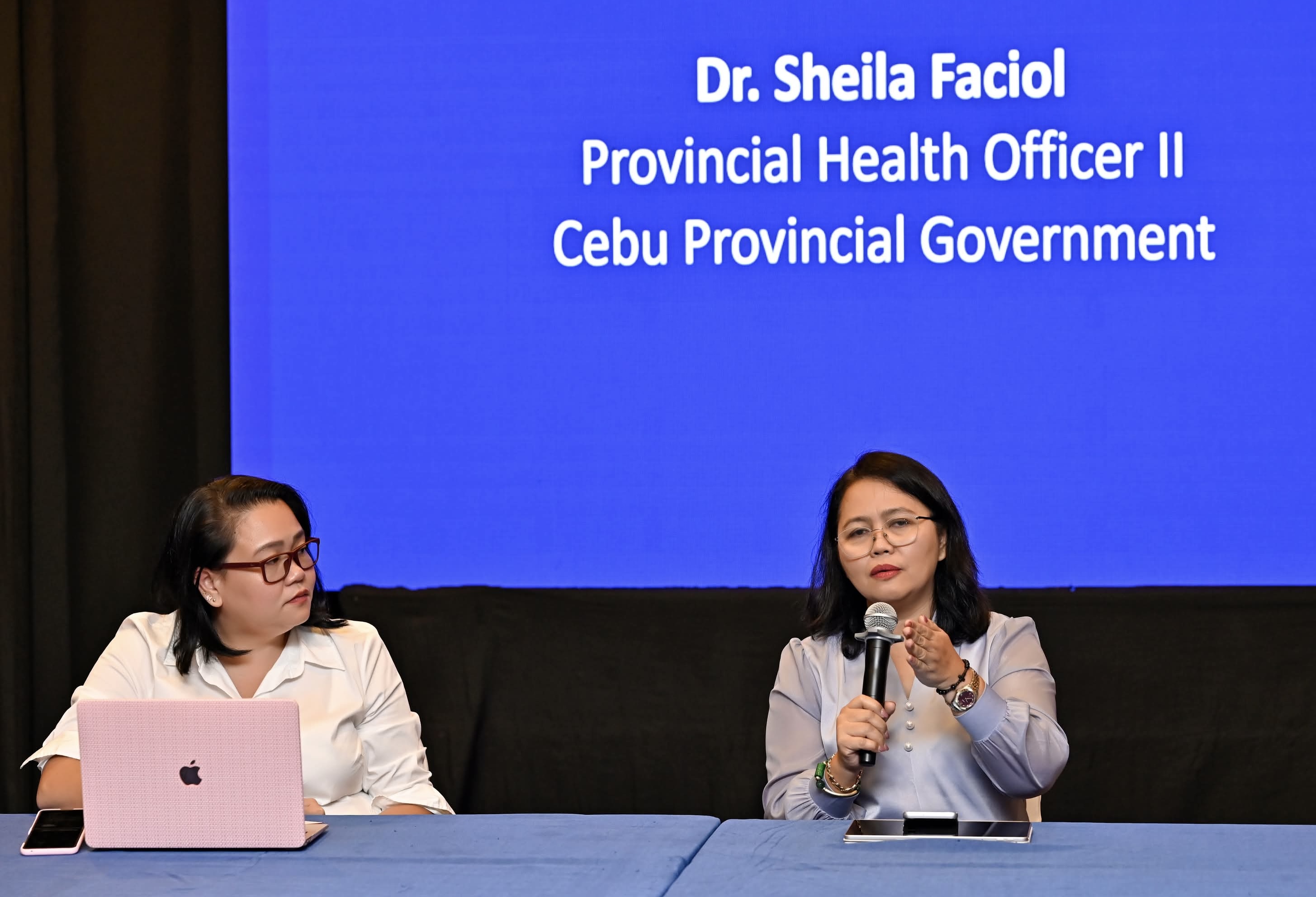
The Cebu Provincial Health Office (PHO) is urging local government units (LGUs) and communities to intensify cleanup efforts as dengue cases in the province continue to rise, stressing that removing stagnant water should come before fogging operations.
Cebu recorded 2,324 dengue cases and 17 deaths from January to Aug. 18, with cases increasing since July amid the rainy season.
Dr. Sheila Faciol of the PHO said rainy weather creates more areas where mosquitoes can breed, making regular cleanup crucial in preventing transmission.
“It’s not in the canals, it’s not in the estuaries, but on clean stagnant water,” Faciol said during the Hisgutan Ta! Media Forum on Thursday, Aug. 27.
She identified flower vases, gutters, water containers and tanks as potential mosquito-breeding sites that households should regularly inspect and clear.
The PHO activated its dengue council in July and has been urging households, barangays and LGUs to intensify cleanup drives, particularly in areas recording dengue cases.
Faciol said LGUs already have dengue brigades, although their activation varies depending on the number of cases in their areas.
The province is also urging schools to conduct regular cleanup activities, particularly in toilets, water storage areas and other places where stagnant water may collect.
Fogging or misting, meanwhile, is being treated as a last resort. Affected areas are expected to conduct cleanup activities first before using misting in specific locations where mosquito control is needed.
The approach follows the “Search and Destroy” component of the 4S strategy against dengue, which focuses on identifying and eliminating mosquito-breeding sites.
Talisay City recorded the highest number of cases among the areas cited by Faciol, with 272, followed by Toledo City with 217 and Medellin with 182.
The PHO has extended assistance to the three areas to help contain the increase.
Faciol said the province’s dengue cases have surpassed last year’s figures, although she did not provide the comparative 2025 data during the briefing.
The PHO is also reminding parents and caregivers to monitor children who develop fever.
Dengue testing is available at rural health units and the province’s 16 government-owned hospitals. Faciol advised families to bring children with fever to the nearest health facility, particularly if the fever persists for three to five days.
The province is also monitoring leptospirosis, another rainy-season health concern. Cebu recorded 72 cases from January to Aug. 18.
Faciol advised residents exposed to floodwaters to wash thoroughly with soap and water and seek medical attention at the nearest health center as soon as possible.
The PHO continues to emphasize household and community cleanup as the first line of defense against dengue, particularly the regular removal of stagnant water where mosquitoes can lay eggs.















Comments