



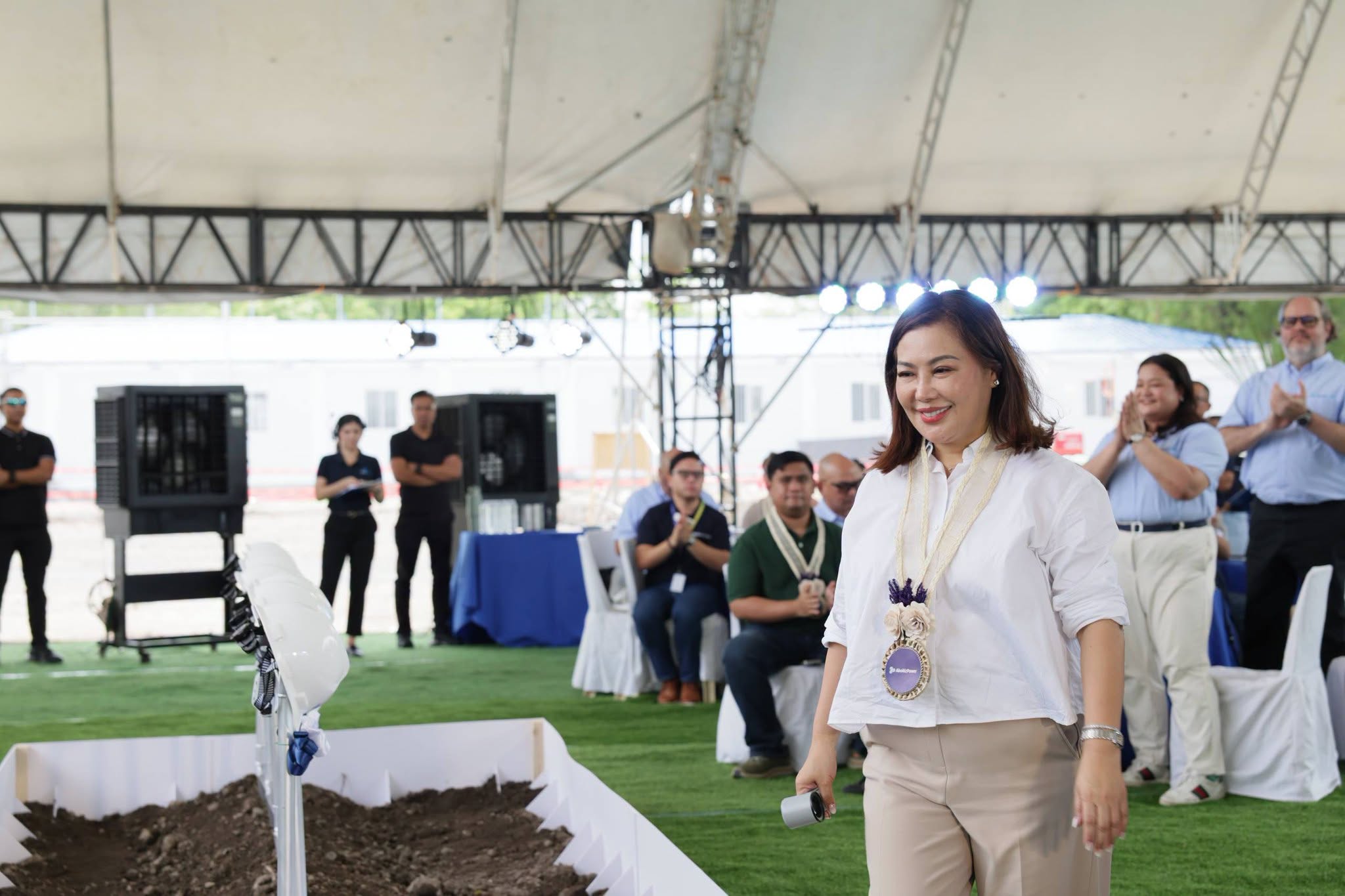
Cebu’s expanding economy is increasing the demand for a power system that can provide dependable electricity to households, businesses and essential services, Gov. Pamela Baricuatro said.
Baricuatro has identified power stability as a major concern as electricity demand continues to rise.
“One of our biggest concerns today is power stability,” Baricuatro said.
She noted that Cebu had experienced several yellow alerts in recent months, highlighting the need to strengthen the systems that support homes, businesses, hospitals, schools and industries.
The pressure on Cebu’s power system comes as Central Visayas continues to post economic growth.
The region’s economy expanded by 3.7 percent in 2025, reaching P1.32 trillion in gross regional domestic product and retaining its position as the largest regional economy outside Metro Manila.
The region recorded the growth despite trade pressures, typhoons, a major earthquake and other disruptions.
For Cebu, sustaining that growth will require additional generation capacity as well as infrastructure capable of moving and managing electricity across the grid.
Battery energy storage is emerging as one component of the province’s response.
Aboitiz Power Corp. is developing a 60-megawatt battery energy storage system in Naga City to support grid reliability and rising electricity demand in the Visayas.
AboitizPower Transition Business Group President and Chief Executive Officer Celso Caballero III said the project is part of efforts to make the energy system more flexible and resilient.
“Naga BESS represents transformation in action,” Caballero said.
Meralco PowerGen Corp. has also energized the first phase of its Toledo battery energy storage project, with 25 MW and 56.44 megawatt-hours of capacity.
The facility can store electricity from renewable and conventional sources and release it during periods of high demand.
Storage alone, however, cannot address supply constraints. Batteries need electricity to charge, while generating facilities require adequate transmission capacity to deliver power to consumers.
Renewable energy projects are also being developed across the Visayas.
Data from the Department of Energy, as cited by the Philippine Information Agency, showed 2,179.47 MW of committed renewable energy capacity in the Visayas as of May 2026. These include biomass, geothermal, hydropower, solar and wind projects.
The same data showed 419.9 MW of committed energy storage capacity from battery and hybrid facilities.
The National Grid Corporation of the Philippines is meanwhile constructing the Cebu-Lapu-Lapu 230-kilovolt transmission line and the Lapu-Lapu 230-kV substation to support Metro Cebu and Mactan Island and accommodate additional renewable energy capacity.
Baricuatro has also announced a Provincial Energy Master Plan that will bring together national energy policies, local priorities and private-sector initiatives.
The plan seeks to make Cebu “energy-secure, climate-resilient and future-ready.”
The latest condition of the Visayas grid further highlighted the pressure facing the region.
Photo courtesy of Cebu Province















Comments