
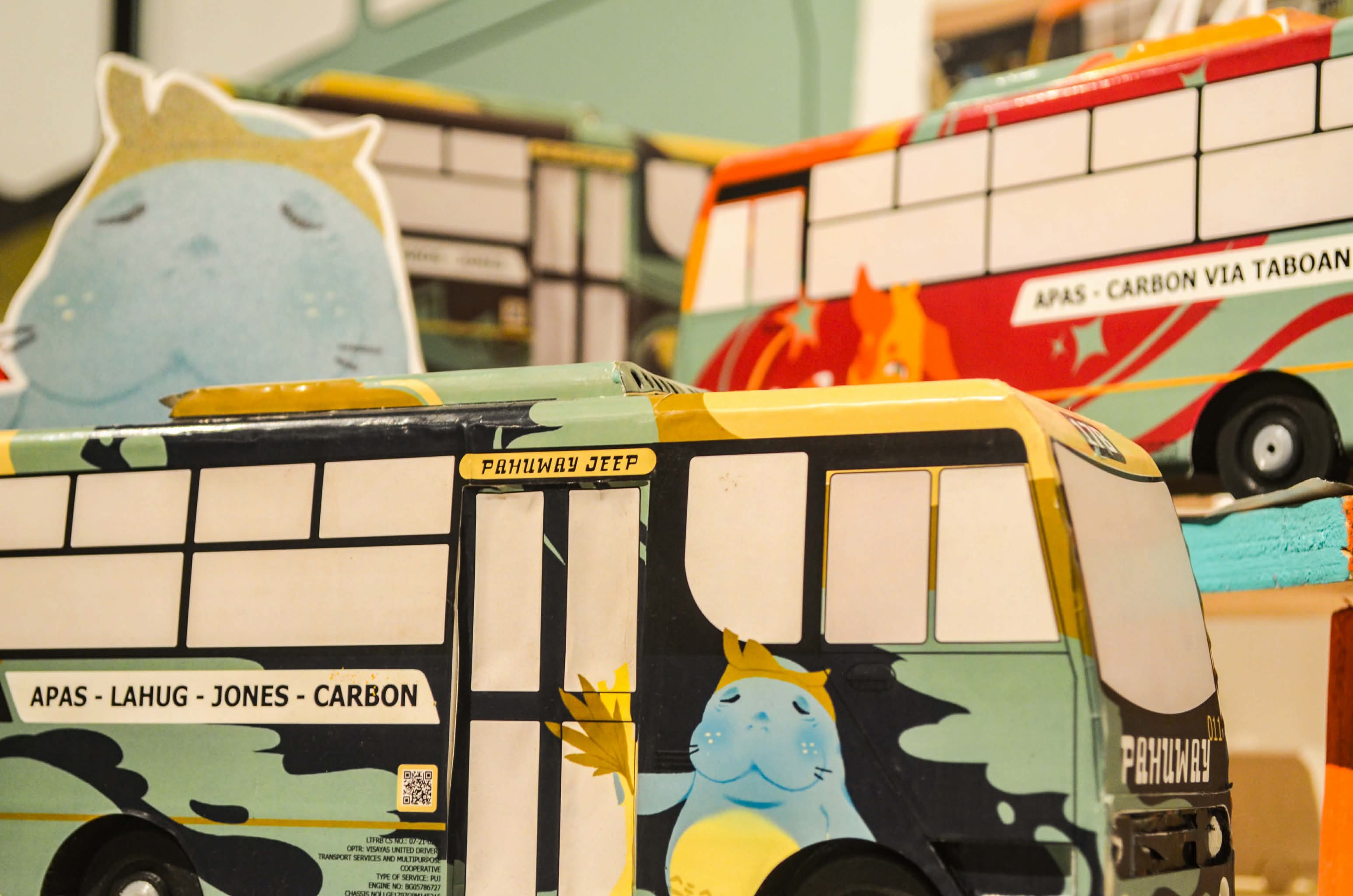
The modern jeepneys in Cebu that have rolled out under the government’s Public Transport Modernization Program (PTMP) have featured a plain white outer base with printed texts of the jeepney code on the front and its route on the side. The modern day jeeps appear functional and clean, yet it is visually stripped of its culture and artistry that made the old ones stand out.
This observation is what made Jan Paolo Cormanes, a graduating fine arts product design student at the University of the Philippines Cebu, reimagine the design concept into the new jeepney system rather than forget the artistry altogether.
His undergraduate thesis, Tagdalan: Developing a Culture-based Wayfinding System Integrating Traditional Jeepney Visual Identity into Cebu’s Modern Public Transport Design, proposes a city-scale transit identity system that applies Cebuano characters, motifs, and colorways to modern PUVs organized by Cebu’s pre-existing route cluster.
A Perspective from the Outside
Cormanes moved to Cebu City for college and found himself fascinated by the culture of the jeeps and their system of route codes. Fast forward to the release of the modern jeepneys, he realized the lack of designs in the recent operating models.
“I became increasingly aware of how modernization was changing the visual identity of Cebu’s streets. Traditional jeepneys carried so much personality, culture, and craftsmanship, but many of those qualities seemed to be disappearing,” Cormanes told PBB.
His experiences led him to develop a research question for inquiry: could designs make routes easier to identify while also restoring unique Filipino and Cebuano visual culture and the arts?
How the System Works
Tagdalan, a Cebuano word meaning “one who shows the way,” uses Cebu’s existing route code cluster system as its foundation. Routes that share a number series like 17x, 20x, and 01x, would be given a shared theme and identity based on Cebuano folklore and values. Within each code cluster, individual routes are differentiated through unique characters, motifs, and colors. “The character-based system provides commuters with additional visual cues beyond route codes, which may be especially helpful for tourists, first-time riders, and those unfamiliar with the city,” Cormanes mentioned.
The pilot thesis covers the 17-series routes where Cormanes developed an original cast of characters inspired by Cebuano local storytelling traditions. The goal of the design is for commuters to recognize the route at just a glance from the jeep design alone without relying solely on the route codes on top.
Cormanes described his design process that evolved over the course of a year. “It started with research into Cebu’s jeepney culture, commuter experiences, and the effects of modernization,” Cormanes said. “Through surveys, interviews, co-creation sessions, and conversations with different stakeholders, the idea gradually grew into what is now the Tagdalan system. From there, I developed the characters, jeepney designs, prototypes, and digital platform with collaborators and other designers, constantly revisiting and refining each part based on feedback and testing.”
The thesis includes structured user testing designed to measure whether the system actually improves route recognition and commuter engagement compared to the plain-white PUVs currently operating on Cebu’s roads.
Beyond Navigation: A Platform for Culture
Cormanes is clear that Tagdalan is not just a transit usability project. It is, in his vision, a cultural project as well. “Beyond navigation, the project also serves as a way of celebrating Cebuano culture by transforming everyday transportation into a platform for storytelling, local values, and community identity.”
The PTMP rollout is still ongoing nationwide, with thousands of modern PUVs still being deployed around the Philippines and Cebu for more routes. With no agreed-upon visual designs for these modern units, projects such as Tagdalan arrive at a moment where opportunities for suggestions and ideation are still welcome for consideration.
Through projects like Tagdalan, culture and identity is given room to exist with modern innovations. “The Cebu jeepney scene is constantly changing, but I hope we don’t lose the culture and personality that made it special in the first place,” Cormanes told PBB. “Modernization is important, but so is remembering the stories and people behind it.”
Tagdalan is displayed at TAGBO 2026: Where Design Meets Urban Futures, UP Cebu CCAD’s annual product design thesis showcase, at the Kabilin Center until tomorrow, June 25, 2026. More information about the project can be found in Cormanes’ website at https://major-number-885118.framer.app.

Comments