
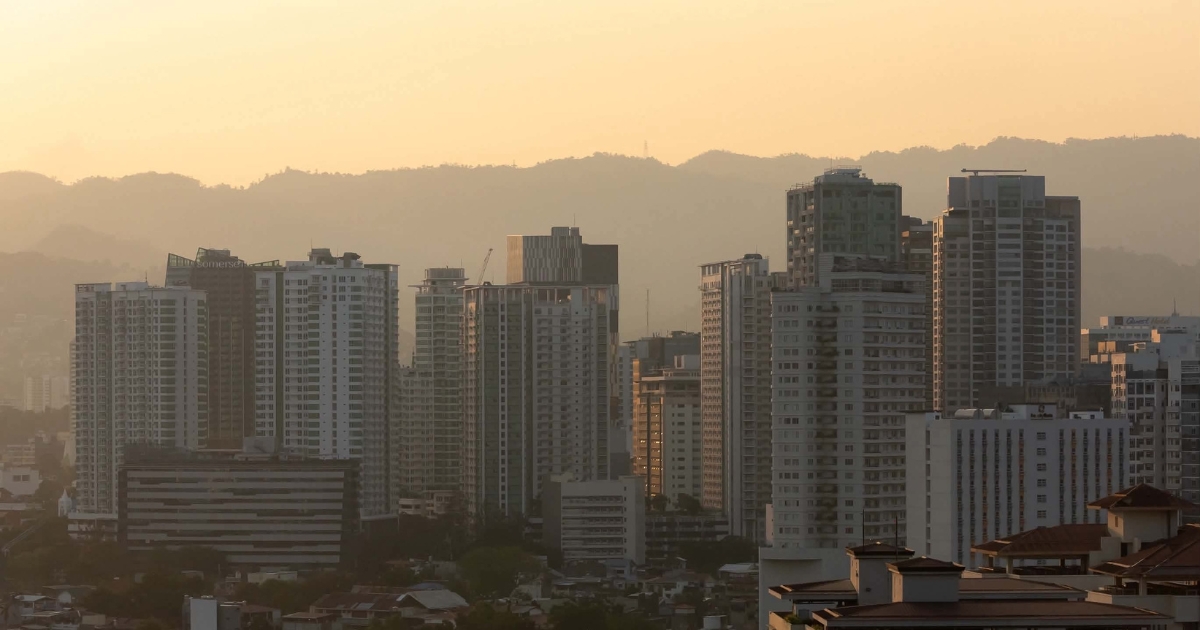
The air over Metro Cebu started to loosen its grip on Tuesday, April 21, as pollution levels eased following days of stagnant haze, with the Air Quality Index dropping to 139 and signaling a shift away from “Very Unhealthy” conditions.
The change came as stronger local wind activity helped disperse accumulated particulate matter that had been trapped over the metropolitan area since mid-April.
The improved airflow disrupted the stagnant air mass, allowing pollutants to spread out instead of settling close to ground level.
Authorities recorded the latest AQI reading at 139, a noticeable decline from 177 on April 20 and a peak of 199 on April 19, when air conditions reached their worst classification.
The current level places Metro Cebu under the “Unhealthy for Sensitive Groups” category.
Monitoring stations showed uneven but improving conditions across the region.
The Talisay City station continued to reflect a downward trend in PM2.5 concentrations, while Toledo City maintained “Good” air quality during the same monitoring period.
The improvement followed several days of concern after haze first enveloped Metro Cebu on April 17, driven by stagnant weather conditions that limited air movement and allowed pollutants to accumulate.
Earlier assessments linked the buildup to weak dispersion, high temperatures, and pressure systems that kept emissions near the surface.
The Cebu Provincial Government had previously activated emergency response measures as air quality worsened.
Governor Pamela Baricuatro directed coordination among the Department of Environment and Natural Resources (DENR), Office of Civil Defense (OCD), and Department of Health (DOH) to ensure continuous monitoring and updated public advisories during the episode.
Even with the easing trend, health risks remain in place as fine particulate matter continues to linger in the atmosphere.
Authorities maintained that PM2.5 levels still require caution, especially for individuals more sensitive to air pollution.
Children, older adults, pregnant women, and people with asthma, heart disease, or other respiratory conditions remain advised to avoid prolonged or heavy outdoor activity.
While the general population faces reduced risk compared to earlier days, officials stressed the importance of monitoring symptoms such as throat irritation, coughing, or shortness of breath.
Residents who need to stay outdoors are still encouraged to use well-fitted N95 or KN95 masks, as standard cloth or surgical masks provide limited protection against fine particles that can penetrate deep into the lungs.
Environmental officials said continued wind activity will be a key factor in further improving conditions, as it helps prevent pollutant buildup from reforming over the area.
The Environmental Management Bureau in Central Visayas said it will maintain close observation of PM2.5 levels and weather patterns to track any changes in air quality.
As the haze thins, authorities continue to urge caution despite the improvement, noting that conditions remain unstable until readings consistently return to the “Moderate” or “Good” range.
Photo by Edward Charles Tinga, PBB Photographer

Comments