
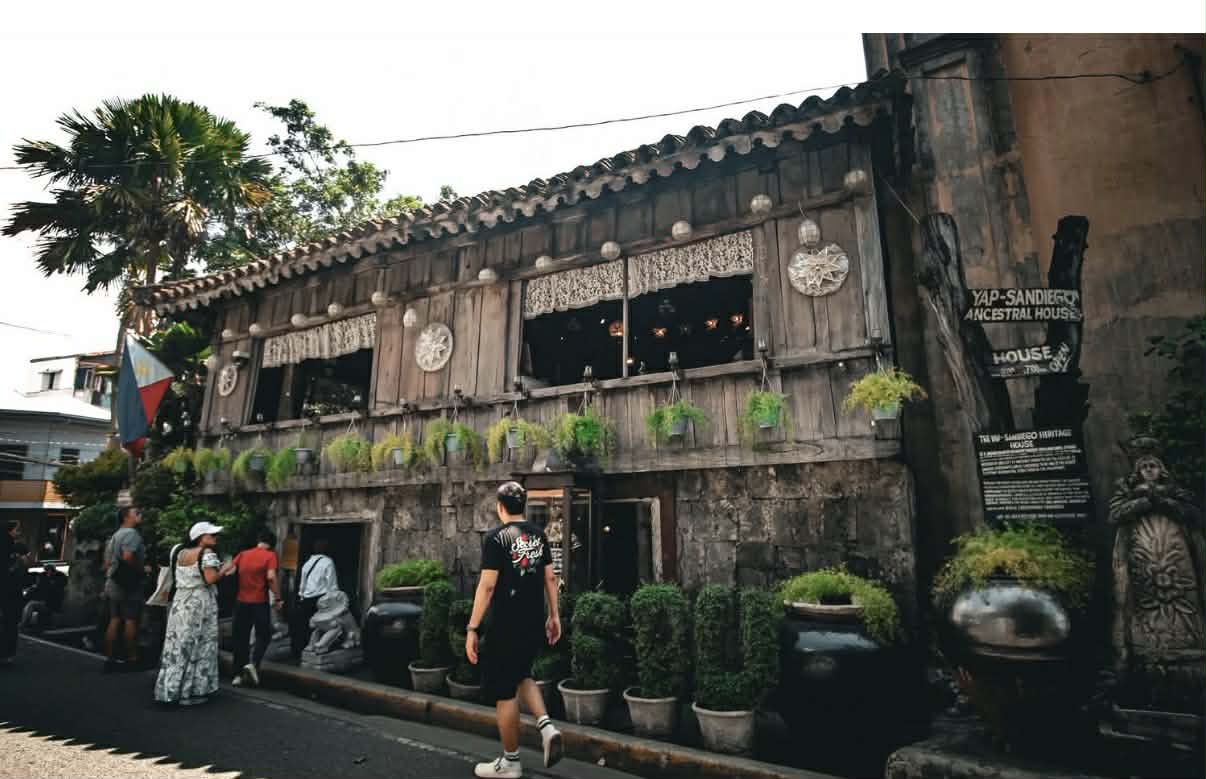
Tucked within the historic Parian District of Cebu City stands one of the most enduring symbols of the island’s rich cultural past, the Yap San Diego Ancestral House. More than just a preserved structure, it is a living testament to centuries of history, offering a rare glimpse into the lifestyle, traditions, and craftsmanship of early Filipino Chinese families in Cebu.
A House Built Through Time
Constructed in 1675, the Yap San Diego Ancestral House is widely regarded as one of the oldest residential houses in the Philippines. Its architecture reflects a fusion of indigenous, Chinese, and Spanish influences, an embodiment of Cebu’s multicultural heritage during the colonial era.
Originally owned by Chinese merchant Don Juan Yap and his wife Doña Maria Florido, the house later became part of the San Diego lineage through marriage, preserving both family legacies under one roof. Built using coral stone, hardwood, and clay tiles, the structure has remarkably withstood the test of time, surviving natural elements and urban development for over three centuries.
A Personal Mission to Preserve Heritage
In 2008, the ancestral house was entrusted to Val San Diego and his wife Ofelia. Rather than modernizing the space, Val chose to preserve and enrich its historical character.
A choreographer and founder of the Sandiego Dance Company, Val transformed the home into a private museum filled with carefully curated collections. Religious icons, antique furniture, vintage photographs, and heirlooms now occupy nearly every corner of the house, each piece telling its own story of Cebu’s past.
Walking Through History
Stepping inside the Yap San Diego Ancestral House feels like entering another era. Visitors are greeted by narrow wooden hallways, creaking floors, and dim natural light filtered through delicate capiz shell windows.
Every detail adds to the immersive experience:
• Wooden floors that echo softly with each step
• Capiz windows casting a warm, diffused glow
• Religious statues or santos arranged with quiet reverence
• Antique furnishings that reflect everyday life from centuries ago
Unlike modern museums, the house does not separate visitors from history. It invites them to walk through it, feel it, and observe it up close.
Cultural Significance
Recognized as an Important Cultural Property, the Yap San Diego Ancestral House holds immense value not just as a tourist attraction, but as a cultural landmark. It represents a period when Cebu thrived as a trading hub, influenced by Chinese merchants and Spanish colonization.
Its preservation is crucial in a rapidly modernizing city where heritage structures are increasingly rare. The house serves as a reminder of Cebu’s identity, deeply rooted in history yet continuously evolving.
A Living Landmark in Modern Cebu
Today, the ancestral house remains one of Cebu’s most visited heritage sites. Tourists, students, historians, and locals alike pass through its doors daily, each leaving with a deeper appreciation for the past.
In a city defined by growth and development, the Yap San Diego Ancestral House stands quietly resilient, unchanged in essence yet more relevant than ever.
It is not just a place to visit.
It is a place to remember.
Photos and Story by Jacq Hernandez

Comments