
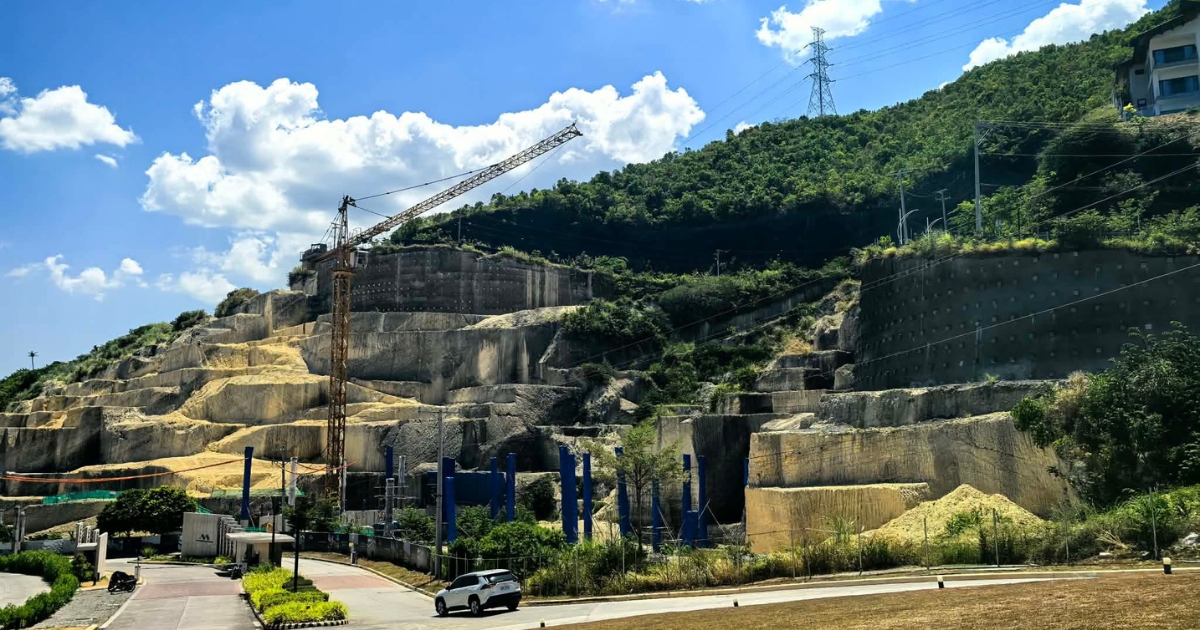
Regulators cleared the Monterrazas de Cebu hillside development to resume operations under continued oversight, reopening a long-running controversy over whether the luxury project contributed to flooding during Typhoon Tino in November 2025.
Mont Property Group told reporters on Wednesday, April 15, during its first formal press briefing that it would move forward under caution while staying under government monitoring.
The Department of Environment and Natural Resources–Environmental Management Bureau in Central Visayas (DENR-EMB 7) lifted its suspension order after confirming compliance with regulatory conditions.
In an order dated April 6, 2026, the agency said the developer paid a P400,000 fine and completed required commitments after a technical conference following the flooding event.
The EMB denied the motion for reconsideration on alleged violations but allowed work to resume under “without prejudice to future monitoring,” requiring continued reporting and public information efforts.
Cebu City Council also opted not to issue a cease-and-desist order, pointing to technical assessments that identified multiple causes of flooding, including drainage constraints, tributary flows, and existing terrain conditions.
Officials cautioned, however, that stopping the project could leave drainage and detention structures unfinished and worsen runoff risks in surrounding communities.
The council left open the possibility of revisiting its position if compliance issues arise.
Mont Property Group general manager Marie Camille Bondad said the company would continue operations with caution under oversight.
“We will continue slowly, again with caution, and of course, with continuous monitoring with the government officials,” Bondad said.
The developer cited a University of the Philippines Institute of Environmental Science and Meteorology study, which attributed the flooding primarily to extreme rainfall during Typhoon Tino.
The study recorded 428 millimeters of rain in 24 hours, a level comparable to Typhoon Ondoy in 2009.
“The primary cause of the flooding was the intensity of the rainfall itself, compounded by system-wide conditions across the broader Cebu area,” Bondad said.
Company officials also pointed to hydrological findings indicating the site sits within a separate watershed system from heavily affected areas such as Cotcot and Mananga rivers.
The Department of Environment and Natural Resources previously flagged violations related to vegetation loss and water management, while climate experts have warned that large upland developments can heighten flood risks in typhoon-prone areas.
Typhoon Tino unleashed heavy rains that caused widespread flooding in Liloan, Mandaue, and Talisay, leaving dozens dead and sparking public criticism of hillside construction projects across Cebu.
Photo by: Kaiser Jan Fuentes

Comments