
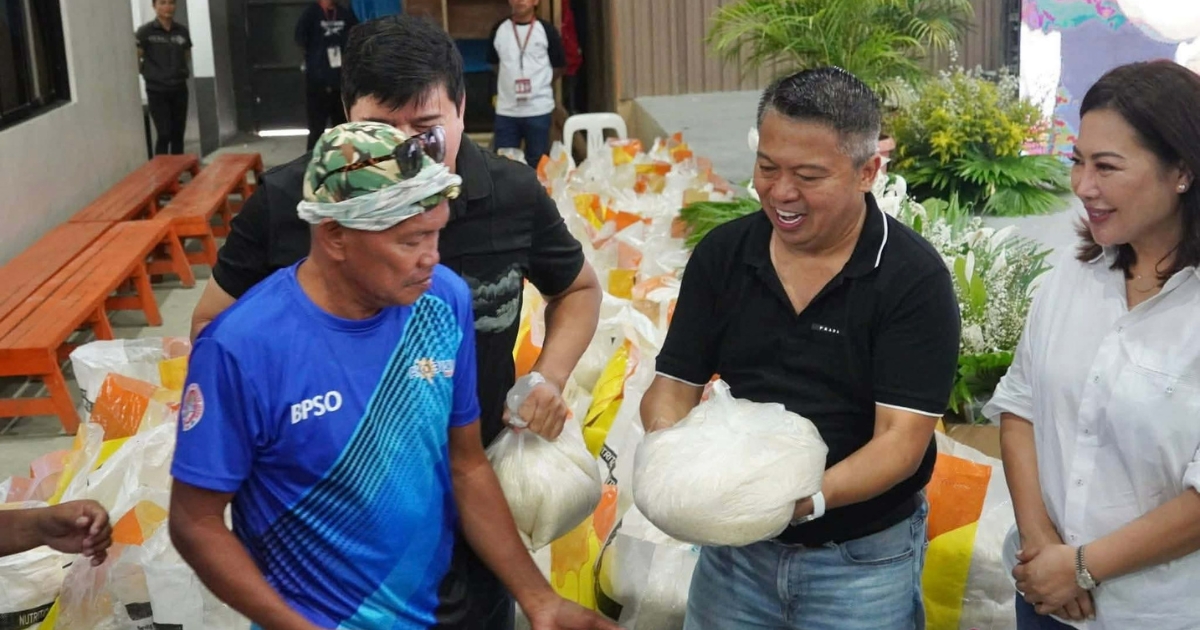
An outreach caravan in Cordova drew large crowds and expanded government aid to a sector long operating on the margins.
A provincial outreach program in Cordova on Wednesday, April 15, drew thousands of residents as the government extended assistance to informal transport workers for the first time.
The “Serbisyo Karaban,” held at the Cordova Sports Complex, delivered financial aid, food support, and public services to beneficiaries that included drivers, farmers, and fisherfolk.
A key development in the rollout was the inclusion of habal-habal drivers, who are often excluded from formal government programs due to the nature of their operations.
A total of 87 drivers received P3,000 in cash assistance along with rice subsidies, marking the province’s first direct intervention for the sector.
For many, the support comes as earnings continue to decline amid rising costs.
“Dako jud og tabang oy… samot na karon,” said Jimuel Escabas, 38, a driver from Barangay Poblacion who has been in the trade since 2019.
He said his daily income has dropped significantly—from as much as P1,000 to around P300—as drivers hesitate to increase fares for fear of losing passengers.
The situation reflects broader challenges in the informal transport sector, where income remains unstable and largely unregulated.
Another beneficiary, Romeo Giltendez, 58, who has spent decades as a driver, described the strain.
“Pait jud kaayo. Mao nay giingon nila nga ihilak nalang,” he said after receiving rice assistance.
Beyond habal-habal drivers, the caravan also distributed food aid to other transport groups, including more than 1,000 e-bike drivers, as well as trisikad and motorcab operators.
Farmers and fisherfolk also received support, including seedlings and fingerlings to help sustain their livelihoods.
Social services were provided on-site, including the distribution of wheelchairs, food packs, and free services such as haircuts and registration assistance.
Cordova Mayor Didoy Suan said the inclusion of habal-habal drivers forms part of efforts to transition them into legal and more sustainable livelihoods.
“Actually ang habal-habal nag istorya na gyud me ni Gov… ako jud ng gibawal, amo na siyang gi-discourage,” Suan said.
He said habal-habal operations are not recognized as a legal mode of transport in Cordova, particularly given the town’s flat terrain and established road network.
Still, he acknowledged the need to support drivers as they shift to alternative sources of income.
“Muna nga katong 87 kabouk nga habal-habal driver tagaan gihapun ug P3,000 kada-usa plus bugas para makaparehistro sila,” he said.
The assistance is intended to help drivers register for delivery platforms such as Grab or Maxim, offering more stable earning opportunities.
Governor Pamela Baricuatro supported the initiative, saying the provincial government remains committed to helping vulnerable sectors adjust during difficult times.
“Basta kami Mayor, suporta gud mi sa imong programa. So we want to give them a chance pud,” she said.
Cordova was selected as the initial rollout site due to the local government’s readiness to implement the transition program.
Baricuatro said similar efforts will continue in other areas, with the next stop scheduled in Sibonga.
Amid ongoing economic pressures, she said the government recognizes the burden faced by ordinary workers.
“In worst times ang ako mahunahunaan, kamo gud… dili lalim,” she said, urging residents to remain resilient. (SBA)
Image courtesy of: Municipality of Cordova

Comments