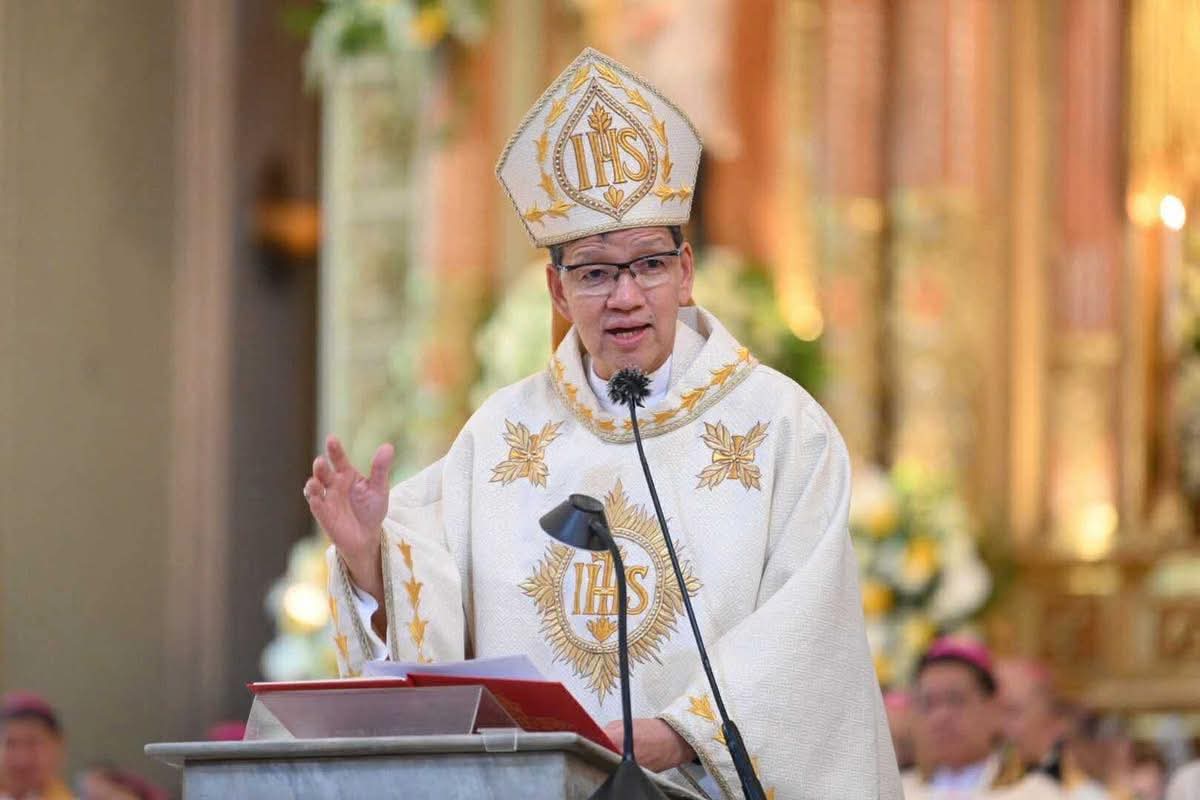
Cebu Archbishop Alberto S. Uy is calling on Filipinos across sectors to unite in a citizen-driven campaign against corruption, emphasizing that the effort should be guided by conscience, shared responsibility, and love of country rather than hostility toward government.
In a pastoral proposal titled “A Humble Proposal for a United Anti-Corruption Advocacy,” Uy said.
He urged civil society groups, faith-based organizations, professionals, and community leaders to collaborate in promoting integrity, transparency, and justice, particularly at the local level where corruption often hits ordinary families hardest.
“I offer this letter as a humble proposal, not as a command and not as a claim to moral superiority, but as my small contribution to our shared advocacy against graft and corruption in our beloved Philippines,” Uy said.
Partners of reform, not enemies of government
The archbishop emphasized that anti-corruption advocates should see themselves as partners of government, not adversaries. He stressed that reform efforts are meant to strengthen public systems rather than shame or destabilize institutions.
“Our aim is not to shame, attack, or destabilize, but to assist, to strengthen, and to help build systems that protect public trust,” Uy said, noting that corruption disproportionately harms the poor and vulnerable.
“Corruption thrives where systems are weak, where citizens are silent, and where conscience is asleep,” he added.
Citizen vigilance at the community level
Uy proposed enhancing transparency and monitoring at the barangay and community level. He encouraged training volunteers to observe public projects responsibly, understand basic public records, and report irregularities lawfully and respectfully.
“This is not vigilantism. This is responsible citizenship,” he said. “When people are informed and present, corruption finds fewer places to hide.”
Values formation beyond punishment
The archbishop underscored that while laws can punish wrongdoing, preventing corruption requires strong values formation and ethical education.
He called for targeted programs for youth, public servants, faith leaders, and civil society organizations.
“Public office is a sacred trust. Corruption steals from the poor and the unborn. Small dishonesty, when tolerated, grows into national tragedy,” Uy said.
He stressed the importance of forming “not only watchdogs, but men and women of conscience.”
Supporting reforms and protecting truth-tellers
Uy also encouraged support for systemic reforms that reduce opportunities for corruption, including digitalization, stronger access to information, and protections for whistleblowers.
He called for responsible media and legal partnerships to ensure that truth is reported with accuracy, fairness, and charity.
“Silence protects corruption. Truth, spoken with love, protects the nation,” he said.
Recognizing integrity, sustaining hope
While urging firm opposition to corruption, Uy reminded Filipinos to acknowledge integrity where it exists, saying recognition helps strengthen good governance.
“When integrity is recognized, it is strengthened. When goodness is affirmed, it multiplies,” he said.
He concluded by noting that the fight against corruption is a long journey requiring patience, unity, courage, and hope.
“As a shepherd, my role is to remind us that the fight against corruption is ultimately a moral and spiritual struggle—one that concerns the soul of our nation,” Uy said. (LLP)