



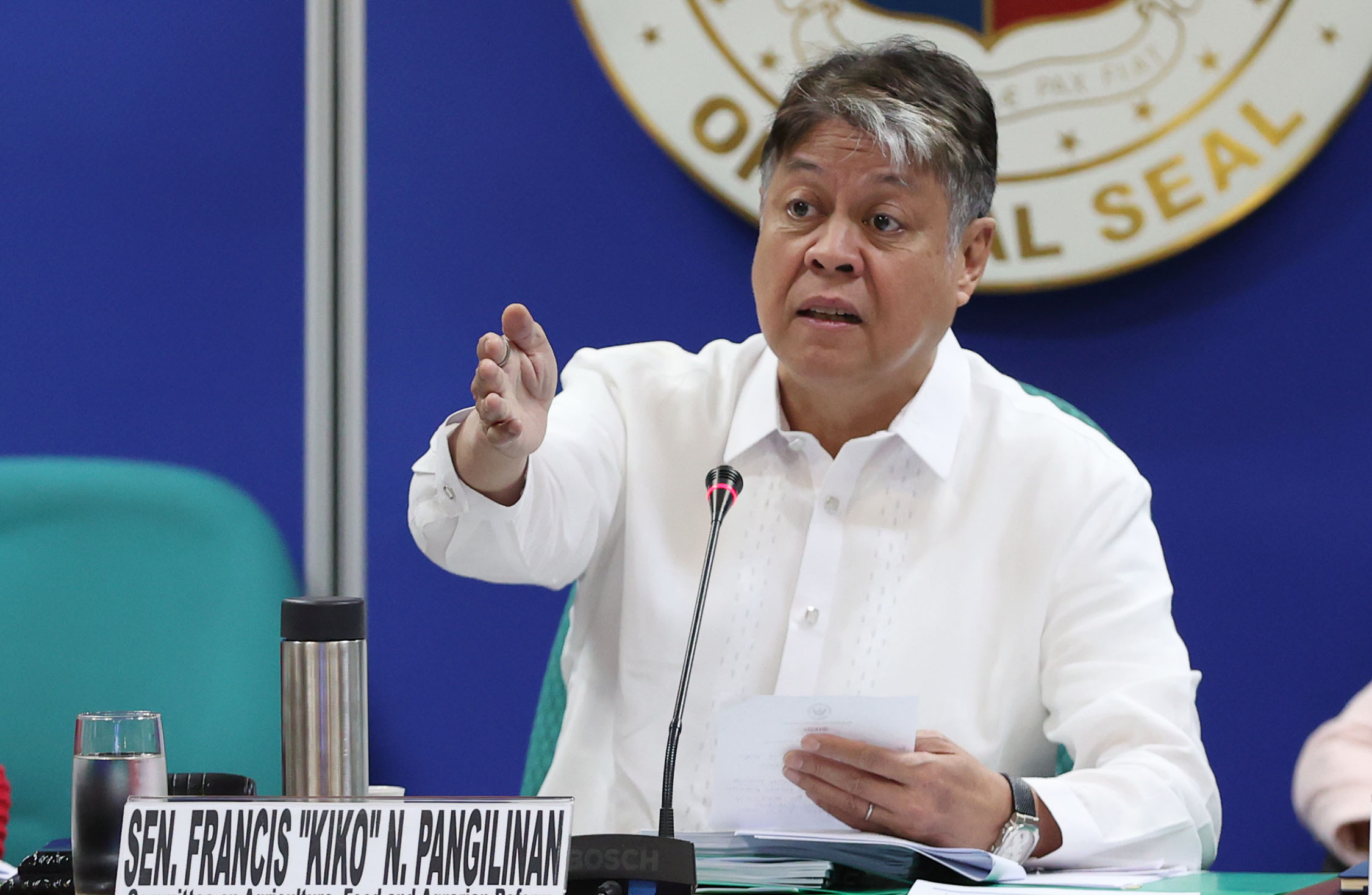
Sen. Francis “Kiko” Pangilinan has raised concerns over the Philippines’ growing dependence on imported rice, saying the country’s declining food self-sufficiency and rising rice inflation make it urgent to address suspected agricultural smuggling and weaknesses in supply management.
Speaking during a Senate hearing on Friday, Nov. 20, Pangilinan, chair of the Senate Committee on Agriculture, Food and Agrarian Reform, said the country had imported 4.49 million metric tons of rice as of Oct. 29, already 32% more than its total imports for 2025.
The hearing examined two shipments involving the vessels MV Tayson 2 and MV Lucky Star, which carried a combined volume of nearly 20,000 metric tons of rice. Pangilinan said the Senate wanted the Philippine Ports Authority and the Bureau of Plant Industry to clarify the status of the imported 5% broken rice brought into the country.
The issue had surfaced during the Department of Agriculture’s budget deliberations on Oct. 21, when Agriculture Secretary Francisco Tiu Laurel Jr. addressed the matter and welcomed an investigation if necessary.
Pangilinan said lawmakers opted to hold a separate hearing to examine the shipments without sidetracking the department’s budget discussions.
The committee also took up reports about the alleged discovery of imported onions in Valenzuela City, although the origin and circumstances of the shipment had yet to be established.
Pangilinan compared the country’s current food-sufficiency level with previous years, saying local rice farmers supplied more than 90% of domestic consumption in 2014 to 2015 and 86.2% in 2018. The figure has since fluctuated downward to just over 70%.
He also pointed to rice inflation exceeding 20% year-on-year, warning that higher rice prices contribute to nationwide inflation and affect consumers across the country.
Pangilinan cited the relationship between rice prices and overall inflation, recalling that during 2014 to 2015, rice inflation fell from 15% in June to 0.08% by September 2015. He said nationwide inflation also reached its lowest level in 20 years during that period.
“The issue of rice is really a gut-issue for our people. And that’s why we want to find out ano bang naging problema rito at ano ba ang dapat natin gawin? Sino ang dapat magpaliwanag? Meron bang pananagutan? And paano natin aayusin itong problemang ito?” he said.
The senator stressed that the inquiry was not solely intended to identify those responsible but to determine what measures could prevent similar problems and improve the country’s management of agricultural imports.
“We would like to fix the problem. I’m not here to find fault, I’m here to find solutions,” Pangilinan said.
He added that accountability remained necessary to address weaknesses in the agriculture sector, particularly in preventing smuggling and managing the country’s rice supply.
“Accountability is necessary if we are to solve the problem,” he said, emphasizing the need to pursue solutions that would protect consumers and the livelihood of Filipino farmers.















Comments